
Improve Cardiac Arrest Survival Rates: AEDs in the Workplace
Survival rates continue to decline across individuals who have experienced a cardiac arrest outside of hospital. That means it’s more important than ever to consider the impact of staff training and correct equipment in improving the outcomes for many.
The stark reality is that every minute without cardiopulmonary resuscitation (CPR) and defibrillation reduces a person’s chance of survival by approximately 10% on average. In a workplace or public setting, the first few minutes after a cardiac arrest are critical, and immediate intervention can be the difference between life and death.
Based on findings from the Out-of-Hospital Cardiac Arrest Outcomes Registry (OHCAO), Resuscitation Council UK and British Heart Foundation, fewer than one in 12 patients survive beyond 30 days following an out-of-hospital cardiac arrest.
This is where AEDs can make a significant difference to the outcomes of those who suffer from cardiac arrests.
Book our AED training or First Aid training courses today! Contact us to get a free, no-obligation quotation.

Survival rates continue to decline across individuals who have experienced a cardiac arrest outside of hospital. That means it’s more important than ever to consider the impact of staff training and correct equipment in improving the outcomes for many.
The stark reality is that every minute without cardiopulmonary resuscitation (CPR) and defibrillation reduces a person’s chance of survival by approximately 10% on average. In a workplace or public setting, the first few minutes after a cardiac arrest are critical, and immediate intervention can be the difference between life and death.

Based on findings from the Out-of-Hospital Cardiac Arrest Outcomes Registry (OHCAO), Resuscitation Council UK and British Heart Foundation, fewer than one in 12 patients survive beyond 30 days following an out-of-hospital cardiac arrest.
This is where AEDs can make a significant difference to the outcomes of those who suffer from cardiac arrests.
Book our AED training or First Aid training courses today! Contact us to get a free, no-obligation quotation.
What is an AED?
Automated External Defibrillators (AEDs) are portable devices that are specifically designed to analyse the heart’s rhythm and, if necessary, deliver a controlled electric shock to restore normal function. AEDs are created to be easy to use and come equipped with voice prompts, ensuring that even those without medical experience can provide life-saving assistance in the event of an emergency. Despite their ease of use, workplace first responders and first aiders should still be trained to operate an AED safely and effectively.
Why does your workplace need an AED?
Cardiac arrest can occur without warning and affect individuals of all ages and fitness levels. Anybody can suffer a cardiac arrest at any time – but prompt defibrillation within the first few minutes can significantly improve survival rates.
Save lives with rapid response
On-site AEDs provide employees and visitors with immediate assistance before emergency medical services arrive. As ambulance response times vary greatly, having an AED available ensures that life-saving intervention is not delayed.
Legal and Ethical Responsibility
Every employer has a duty of care to provide a safe environment for employees and visitors by offering trained staff and first aid equipment. Providing an AED demonstrates a commitment to workplace safety and compliance with health and safety best practices.
Increases Survival Rates
Every employer has a duty of care to provide a safe environment for employees and visitors by offering trained staff and first aid equipment. Providing an AED demonstrates a commitment to workplace safety and compliance with health and safety best practices.
Inspire Confidence
Knowing that an AED is readily available, and that staff are trained to use it, can reduce anxiety among employees and visitors. This creates a more secure and reassuring work environment and demonstrates a commitment to wellbeing in the workplace.
The role of training in AED effectiveness
While AEDs are designed to be user-friendly, proper training provides staff with the confidence to use them correctly during high-pressure situations.
Specialist AED training is available via providers such as TutorCare, and have been specifically designed to familiarise staff with the skills to firstly recognise the signs of cardiac arrest and secondly operate an AED safely and correctly. A well-trained workforce can significantly increase the likelihood of successful defibrillation and improve outcomes for individuals suffering cardiac arrests.
With increased adoption across UK workplaces, AEDs are fast becoming an essential component of workplace safety. With rapid response capabilities, ease of use, and a proven track record of saving lives, AEDs should be a priority for every organisation.
Investing in AEDs, along with staff training, not only fulfils a moral and legal duty but also significantly enhances the chances of survival in the event of a cardiac arrest. Workplaces that take proactive steps to incorporate AEDs into their emergency response plans are helping to create safer environments for everyone.
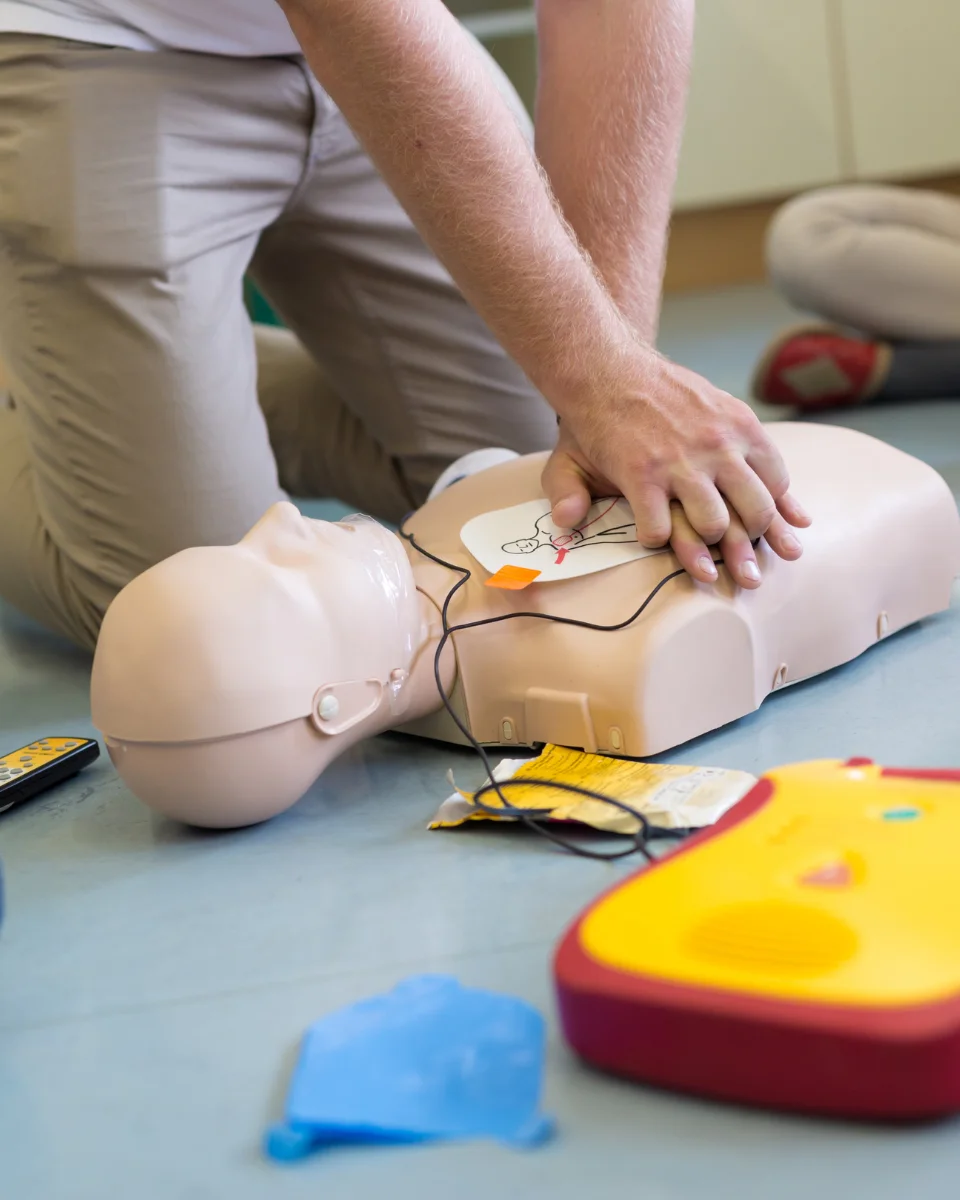
The role of training in AED effectiveness
While AEDs are designed to be user-friendly, proper training provides staff with the confidence to use them correctly during high-pressure situations.
Specialist AED training is available via providers such as TutorCare, and have been specifically designed to familiarise staff with the skills to firstly recognise the signs of cardiac arrest and secondly operate an AED safely and correctly. A well-trained workforce can significantly increase the likelihood of successful defibrillation and improve outcomes for individuals suffering cardiac arrests.

With increased adoption across UK workplaces, AEDs are fast becoming an essential component of workplace safety. With rapid response capabilities, ease of use, and a proven track record of saving lives, AEDs should be a priority for every organisation.
Investing in AEDs, along with staff training, not only fulfils a moral and legal duty but also significantly enhances the chances of survival in the event of a cardiac arrest. Workplaces that take proactive steps to incorporate AEDs into their emergency response plans are helping to create safer environments for everyone.
Invest in AED staff training
Enhance your workplace’s cardiac arrest response with AED staff training. TutorCare’s three-hour course, led by experienced trainers, equips staff with the skills needed to improve survival rates. Enquire now and learn more about our AED and first aid training options.
Published 21/03/2025
We aim to beat any equivalent quote!
Enquire Now / Request a Quote
Related Blog Posts

This article looks at what a business should include in a basic first aid kit, along with a list of injuries each item addresses. Stocking a basic first aid kit In a typical first aid kit, your stock list can be split into three categories: dressings, necessities, and extras. Dressings are used to cover up …
Continue reading "Basic first aid kit – What should you include? – The Training Hub"

It is important to understand the elements of a good process safety management programme to protect employees from harm when they are in their work environment. Implementing such a programme is impossible without cooperation from every level of the company, managers and non-managers alike. In this article we look at the core elements of a …
Continue reading “Safety Management Programme – Essential Elements – The Training Hub”

Strokes can be life-threatening, and today they are unfortunately common (there are around 32,000 stroke related deaths in the UK every year). As such, it is important to understand what strokes are, and how to properly identify a stroke as they happen. Identify a stroke – what is a stroke? Strokes occur when blood …
Continue reading “Identify a Stroke – How to identify strokes for carers and family members”